Left line · Pinch hitter
The new hitter owns this plate appearance, so the entry line sits before the play.
Baseball scorekeeping guide
Every box on a scorecard is a tiny diamond. Trace the batter around the bases, jot what happened, and shade it in when they score. Learn the core marks below and you can score a whole game with a single pen.
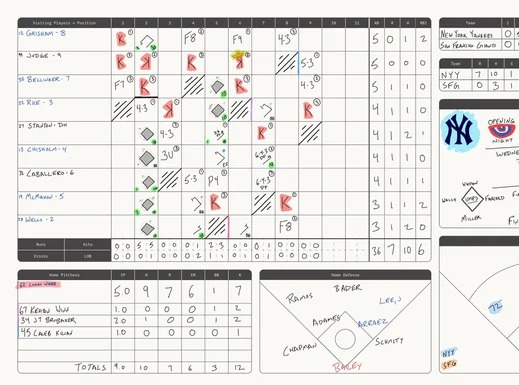
The grid is players down the side, innings across the top. Where a row meets a column is one batter's turn — and inside it is a little diamond shaped just like the field.
Outs are written with the numbers of the fielders who made the play — never their names. Memorize these once and the rest is easy. A ground ball from short to first is just 6–3.
A lit base path means the batter reached; an empty diamond with a mark means an out. That contrast is the whole language — here it is, play by play.
Score in the style you already use. Every scorekeeper has habits — a backward K, just the fielder's number, two slashes for a double. dAImond Inning is trained on the common variants, so you don't have to relearn a thing. Each card shows the main mark plus the other forms the reader accepts (the also row). One clear, common mark per box is all it needs.
Read the cell in two layers. Small hash marks identify the hit; the heavy base path records how far the runner actually traveled. Keeping those jobs separate prevents a later stolen base or wild pitch from turning a single into a double.
Keep every replacement in the same batting-order row, directly below the player who left. The heavy line belongs at the exact moment ownership changes—not simply somewhere in the inning.
The new hitter owns this plate appearance, so the entry line sits before the play.
The starter still owns the play that put them on base. The right line says PR entered afterward.
Place the boundary after the outgoing player's last completed cell, then list the replacement and new position below.
Write the role when the player enters: PH for pinch hitter, PR for pinch runner, or the new defensive position. If a pinch runner stays in the game and later bats, keep using that substitute line—their later plate appearance needs no second entry mark.
Pitching changes are separate: use a heavy horizontal boundary in the pitching register and start the reliever on a new line.
Notation varies by scorekeeper. These widely used forms cover the play symbols most likely to appear on a paper card.
Reference conventions: BaseballScorecard.org guide and MLB's How to Keep Score.
Now watch four boxes tell a story. The trick beginners miss: when a later batter drives someone in, you go back to that runner's box and finish their trip around the bases.
End of the frame so far: 1 run, 2 hits, 2 outs. Tally runs and hits in the little boxes at the bottom of each inning column, and your scorecard adds up the whole game for you.
The little field in the corner of the scorebook is a spray chart — drop a dot where each batted ball lands. One extra habit turns it into data dAImond Inning can read back automatically: number your hits.
Strikeouts, walks, and hit-by-pitches never get a dot — the ball never reached the field. Keep each team on its own dot color, just like the visitor / home dots you already use.
dAImond Inning reads your paper scorebook into stats. A few habits make the read near-perfect.
Blue or black pen reads better than pencil, especially under stadium lights.
Crossouts are fine — just don't write names into the inning header or summary columns.
All four corners in frame, camera square to the sheet, no shadow over the lineup.
Upload a scorecard and review the flagged cells before exporting stats.